Arthritis
Manage spinal arthritis pain and slow degeneration through structural correction and targeted rehabilitation.
Arthritis in the spine is incredibly common, especially as we age. But common does not mean inevitable, and it certainly does not mean you have to accept progressively worsening pain and stiffness. At Lakeside Spine and Wellness in Renton, we address the structural and biomechanical factors that drive spinal arthritis, helping you move better, feel better, and slow the degenerative process.
Understanding Spinal Arthritis
The most common form of arthritis in the spine is osteoarthritis, also called degenerative joint disease. It occurs when the cartilage that cushions the facet joints between vertebrae breaks down over time. As the cartilage wears away, the bones begin to rub against each other, causing pain, inflammation, and stiffness. The body often responds by growing bone spurs — extra bone that can narrow the spinal canal or foramina and compress nerves.
Spinal arthritis most commonly affects the cervical spine and lumbar spine — the areas with the greatest range of motion and the most mechanical stress. Symptoms typically include morning stiffness that improves with movement, aching pain that worsens with activity, reduced range of motion, and occasionally nerve symptoms like numbness or tingling if bone spurs are compressing nerves.
Why Arthritis Develops Where It Does
Here is something most people do not realize about spinal arthritis: it does not affect every joint equally. The joints that degenerate fastest are the ones that bear the most abnormal stress. When the spine is properly aligned, forces distribute evenly across all the joints. But when alignment is lost — due to injury, poor posture, or structural imbalance — certain joints bear a disproportionate load. Those overloaded joints wear out faster.
This is why two people of the same age can have dramatically different levels of spinal arthritis. It is not just about aging — it is about how forces have been distributed through the spine over a lifetime.
Our Testing-First Approach
At Lakeside Spine and Wellness, we begin with comprehensive testing to understand both the current state of your arthritis and the structural factors driving it. Your evaluation includes imaging to visualize the arthritic changes and assess spinal alignment, orthopedic testing to identify which joints are most affected, neurological screening to check for nerve involvement, and postural analysis to evaluate overall spinal mechanics.
This data tells us not just where the arthritis is but why it developed in that pattern. That understanding is the foundation of effective treatment.
Corrective Care for Arthritis
Dr. Andrew Winger develops a corrective care plan that accounts for the degenerative changes already present while working to improve the structural factors that accelerated the degeneration. Chiropractic adjustments restore proper joint mechanics and improve mobility in stiff, arthritic segments. This can reduce pain, improve range of motion, and slow further degeneration by distributing forces more evenly.
Chiropractic Biophysics (CBP) protocols may be used to restore proper spinal curves that have been lost over time. By improving overall spinal alignment, we reduce the abnormal loading patterns that drive arthritic progression. The goal is not to reverse the arthritis that has already occurred — that is not possible — but to create the best possible mechanical environment for the spine going forward.
Rehabilitation and Maintenance
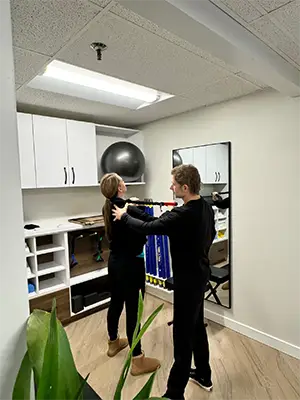
We prescribe targeted exercises to improve joint mobility, strengthen supporting muscles, and maintain the corrections we achieve. For arthritic patients, staying active and maintaining good spinal mechanics is essential. We work with you to develop a sustainable exercise and maintenance program that keeps you moving well and reduces the risk of painful flare-ups.
Who Should Seek Care?
If you have been diagnosed with spinal arthritis, or if you experience chronic spinal stiffness and pain that worsens over time, a structural evaluation can reveal whether biomechanical factors are accelerating your degeneration. This is true whether you are dealing with early-stage arthritis or more advanced changes. Even in advanced cases, improving spinal mechanics can reduce pain and improve quality of life.
Take a proactive approach to managing your spinal arthritis.
Call (425) 276-8044 or Request Appointment.
Ready to Get Started?
Contact us today and take the first step. Free consultations available.