TMJ Services
TMJ care reduces jaw tension, improves bite mechanics, and can relieve headaches and facial pain.
Understanding TMJ Dysfunction
The temporomandibular joints — the paired joints on each side of your head where your jawbone meets your skull — are among the most complex and frequently used joints in your body. You use them every time you speak, chew, yawn, or swallow. When these joints function properly, you barely notice them. When they do not, the symptoms can be debilitating.
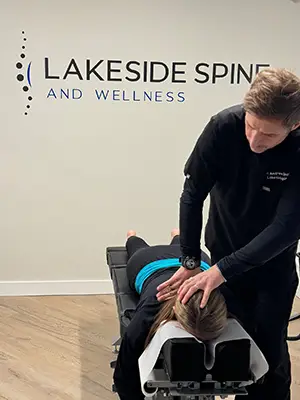
TMJ dysfunction (also called TMD or temporomandibular disorder) occurs when the joint, the surrounding muscles, or the associated nerves are not working in harmony. At Lakeside Spine and Wellness, Dr. Andrew Winger provides specialized TMJ care that addresses not only the jaw itself but also the cervical spine and postural factors that frequently contribute to TMJ problems.
Symptoms of TMJ Dysfunction
TMJ dysfunction presents differently in different people, but common symptoms include:
- Jaw pain or tenderness — especially when chewing, speaking, or opening the mouth wide
- Clicking, popping, or grinding sounds in the jaw joint during movement
- Limited jaw opening — difficulty opening the mouth fully or the jaw locking in an open or closed position
- Headaches — particularly in the temples, behind the eyes, or at the base of the skull
- Ear pain or fullness — without any ear infection present
- Facial pain — aching in the cheeks, around the jaw, or along the side of the head
- Neck pain and stiffness — reflecting the close relationship between the TMJ and cervical spine
- Tooth pain — sometimes caused by clenching or grinding rather than dental disease
- Shoulder and upper back tension — from muscle guarding patterns that develop around TMJ dysfunction
Many patients with TMJ dysfunction have been to dentists, ENT specialists, and other providers without finding lasting relief. This is often because the cervical spine component of their condition was never addressed.
The TMJ-Cervical Spine Connection
The relationship between the TMJ and the cervical spine is one of the most important factors in understanding and treating jaw dysfunction. The muscles that control jaw movement are innervated by the trigeminal nerve, which has extensive connections with the upper cervical nerves. The suboccipital muscles at the base of your skull, the hyoid muscles in your throat, and the muscles of mastication all work together as a functional unit.
When the upper cervical spine is misaligned — particularly at C1 and C2 — it can change the tension balance in the muscles that control the jaw. This can shift the way the jaw tracks, increase clenching and grinding, and create pain patterns that mimic primary TMJ disease.
Conversely, TMJ dysfunction can cause cervical spine problems. Chronic jaw clenching creates tension in the muscles that attach to the skull and upper neck, pulling the cervical spine out of alignment and contributing to neck pain and headaches.
This bidirectional relationship is why treating only the jaw or only the neck often produces incomplete results. At Lakeside Spine and Wellness, Dr. Winger evaluates and treats both areas as part of an integrated approach.
How We Treat TMJ Dysfunction
TMJ treatment at our Renton office begins with a thorough evaluation that includes:
- TMJ examination — assessing joint motion, clicking, crepitus, and tenderness
- Cervical spine evaluation — checking alignment, range of motion, and neurological function in the upper neck
- Posture analysis — identifying forward head posture and other postural patterns that affect both the TMJ and cervical spine
- Muscle assessment — evaluating the muscles of mastication, the suboccipital muscles, and the cervical musculature for tension, trigger points, and imbalance
- X-rays when indicated — to visualize the structural alignment of the cervical spine
Based on these findings, Dr. Winger develops a treatment plan that may include:
Cervical spine adjustments — Correcting misalignments in the upper neck that are contributing to TMJ muscle imbalance and pain. These adjustments are gentle and specific, targeting the exact segments involved.
TMJ joint mobilization — Gentle manual techniques applied to the jaw joint to improve its motion and reduce restrictions. This is performed with care and attention to your comfort level.
Soft tissue therapy — Targeted work on the muscles of the jaw, face, neck, and suboccipital region to release tension, reduce trigger points, and restore proper muscle balance.
Corrective exercises — Specific exercises to retrain the muscles that control jaw and neck function. These may include jaw stretching, cervical stabilization exercises, and postural correction work.
Home care recommendations — Guidance on dietary modifications, stress management techniques, sleep positioning, and habit awareness (such as reducing clenching) to support your recovery between visits.
Who Benefits from TMJ Care
TMJ care at Lakeside Spine and Wellness is appropriate for anyone experiencing jaw pain, clicking, headaches, or other symptoms associated with TMJ dysfunction. It is particularly beneficial for patients who:
- Have tried dental appliances (night guards, splints) without full relief
- Experience headaches or migraines that have not responded to other treatments
- Have neck pain that seems connected to their jaw symptoms
- Clench or grind their teeth, especially during sleep or periods of stress
- Have had dental work that changed their bite and triggered jaw symptoms
- Have been in accidents that involved head or neck trauma
A Whole-Body Perspective
At Lakeside Spine and Wellness, we view TMJ dysfunction within the context of your overall structural health. Your jaw does not operate in isolation — it is connected to your neck, your posture, your nervous system, and your daily habits. By addressing all of these factors together through our corrective care approach, we produce more complete and lasting relief than treating any single factor alone.
Find Relief from TMJ Pain
If jaw pain, headaches, or clicking are affecting your quality of life, TMJ care at Lakeside Spine and Wellness may provide the answers you have been looking for. Dr. Winger will evaluate your jaw and cervical spine together, identify the contributing factors, and develop a plan to get you relief.
Call (425) 276-8044 or Request Appointment to schedule your TMJ evaluation at our Renton office.
Ready to Get Started?
Contact us today and take the first step. Free consultations available.